
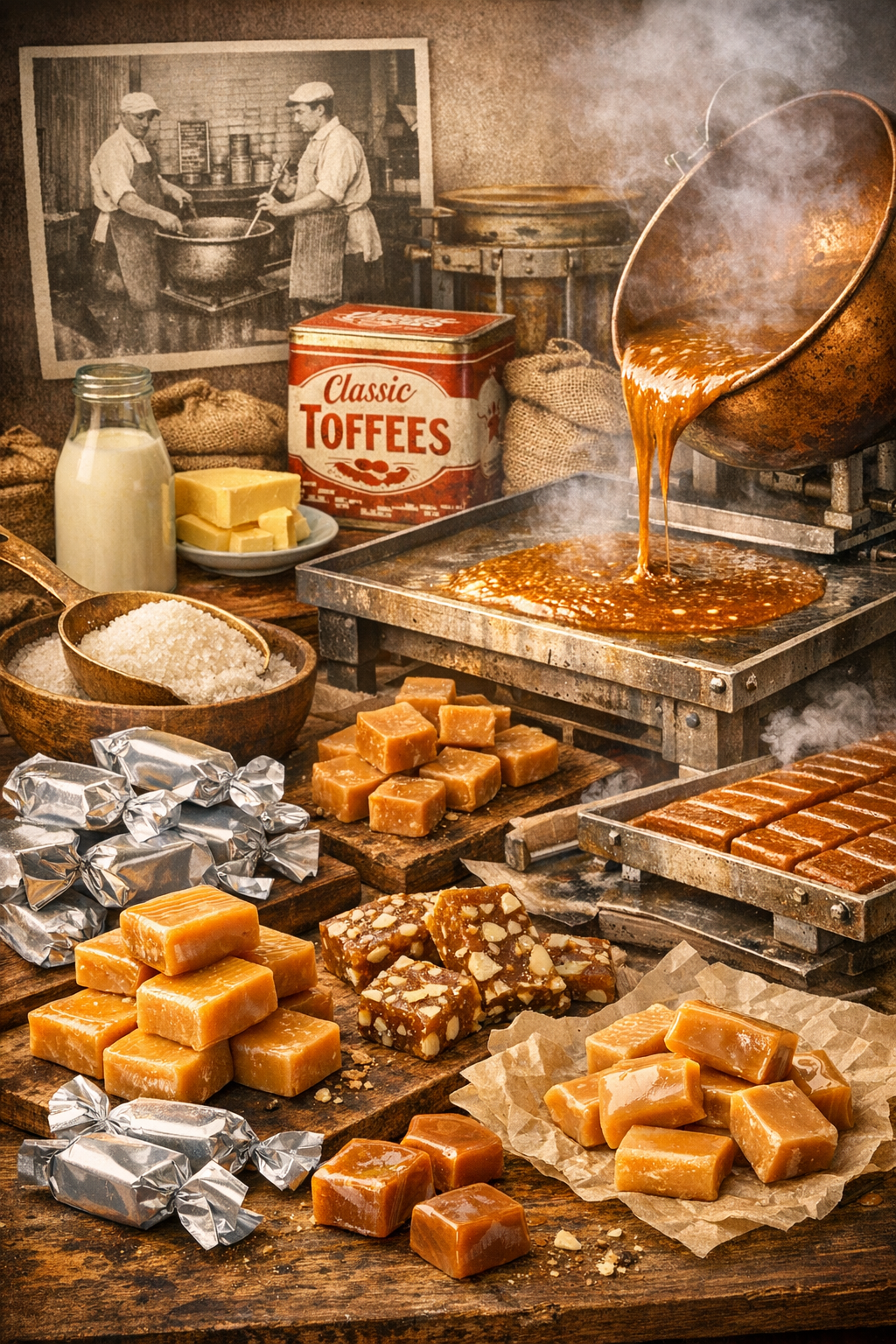
Toffees sit in a delicious middle ground between candy and craft. Chewy yet firm, simple yet deeply satisfying, toffee has earned a permanent place in sweet shops, kitchen cupboards, and nostalgic memories around the world. In this guide, we explore the history of toffees, how they evolved, and the fascinating manufacturing process behind making this timeless confection.
Whether you are a food lover, a home baker, or simply curious about how sweets are made, this deep dive into toffees reveals why they continue to captivate generations.
What Are Toffees?
Toffees are a type of sugar confection made by boiling sugar or molasses with butter, and sometimes flour, to create a rich, caramelised treat. Depending on cooking temperature and recipe, toffees can range from soft and chewy to hard and brittle.
Classic toffees are known for their creamy texture, deep amber colour, and buttery flavour, making them distinct from caramels and fudge, though they share similar ingredients.
The History of Toffees
Early Origins of Toffee
The origins of toffee are closely tied to the development of sugar refining in Europe during the 18th century. As sugar became more widely available, confectioners began experimenting with heating sugar and butter together, discovering that controlled cooking created new textures and flavours.
The word “toffee” is believed to have emerged in Britain, possibly derived from the word “taffy” or from the Creole word “tafia,” a rum made from sugarcane by-products. By the early 1800s, toffee had become a popular treat across the UK.
Toffees in the Industrial Age
The Industrial Revolution transformed toffee from a handmade indulgence into a mass-produced sweet. Advances in temperature control, machinery, and packaging allowed confectionery manufacturers to produce consistent, high-quality toffees at scale.
Iconic British toffees became household staples, often wrapped individually and sold in tins or paper bags. Toffees were affordable, long-lasting, and comforting, which made them especially popular during wartime and periods of rationing.
How Toffees Are Made: The Manufacturing Process
The manufacturing process of toffees is a careful balance of chemistry, timing, and technique. While recipes vary, the core process follows a precise sequence.
1. Ingredient Preparation
The basic ingredients used in toffee making include:
-
Sugar or glucose syrup
-
Butter or vegetable fat
-
Milk or cream (optional)
-
Water
-
Flavourings such as vanilla or salt
Each ingredient plays a role in determining the final texture, colour, and flavour of the toffee.
2. Heating and Boiling
Ingredients are combined in large heated vessels and brought to a controlled boil. This stage is critical. As the mixture heats, water evaporates and sugar concentration increases. The temperature reached determines the final consistency of the toffee.
Soft toffees are cooked to a lower temperature, while hard toffees require higher temperatures to achieve a firm snap.
3. Caramelisation and Colour Development
As sugar heats, caramelisation occurs, creating the deep golden colour and complex flavours associated with traditional toffees. Butter contributes richness and prevents crystallisation, helping maintain a smooth texture.
Modern manufacturers closely monitor this stage using temperature sensors to ensure uniformity and avoid burning.
4. Cooling and Shaping
Once the desired temperature is reached, the toffee is poured onto cooling tables or into moulds. As it cools, it thickens and becomes workable. Some toffees are stretched or aerated to create a lighter chew, while others are left dense and firm.
The toffee is then cut, shaped, or extruded into individual pieces.
5. Wrapping and Packaging
After shaping, toffees are wrapped to preserve freshness and prevent sticking. Traditional wax paper has largely been replaced by modern food-grade wrappers that extend shelf life while maintaining flavour.
Packaging also plays a key role in branding and protecting toffees during transport.
Different Types of Toffees
Toffees come in many forms, each offering a unique eating experience:
-
Chewy toffees: Soft, elastic, and slow-melting
-
Hard toffees: Crunchy with a clean snap
-
Butter toffee: Rich and intensely flavoured
-
Flavoured toffees: Infused with chocolate, fruit, coffee, or nuts
These variations are achieved by adjusting cooking temperatures, fat content, and additional ingredients.
Why Toffees Remain Popular Today
Toffees endure because they balance simplicity with indulgence. They are made from familiar ingredients yet require skill to perfect. Their long shelf life, versatility, and nostalgic appeal keep them relevant in modern confectionery markets.
Artisan producers continue to reinvent toffees with gourmet flavours, while large manufacturers rely on time-tested recipes that deliver consistent quality at scale.
Final Thoughts on Toffees
From humble beginnings in early sugar kitchens to sophisticated modern manufacturing lines, toffees tell a story of culinary evolution and craftsmanship. Understanding the history of toffees and the process behind making them adds a new layer of appreciation to every bite.
Whether enjoyed as a classic butter toffee or a contemporary twist, toffees remain one of the most beloved sweets in the world, proof that sometimes the simplest recipes create the most enduring pleasures.