
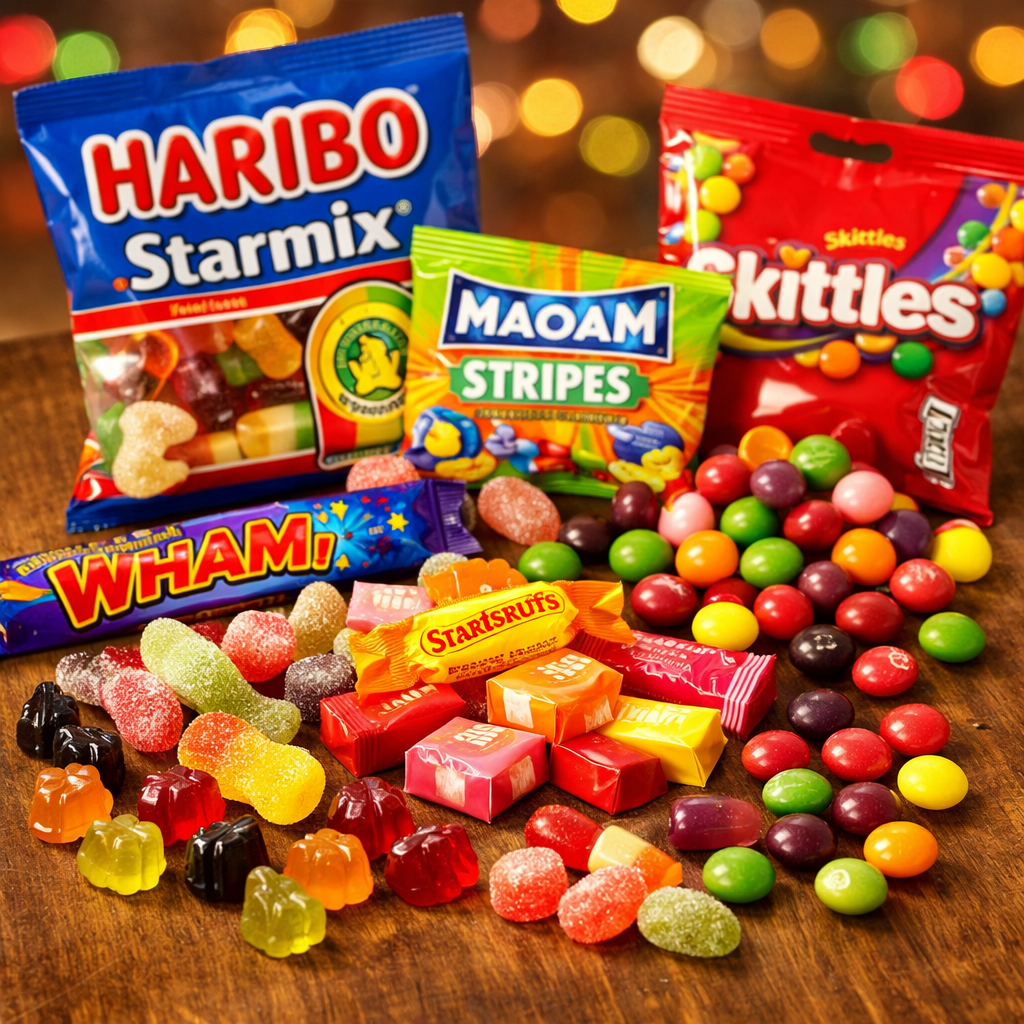
Chewy sweets have long been a cornerstone of British confectionery culture. From nostalgic classics sold in corner shops to modern share bags lining supermarket shelves, chewy confectionery offers a unique sensory experience: bright colours, bold fruit flavours and that satisfying stretch-and-chew texture. In the UK alone, millions of bags of chewy sweets are consumed every year, with major brands dominating supermarket aisles and sweet shop jars alike.
This article explores the most popular chewy sweets in the UK, the best-selling products of the past three decades, fascinating industry facts, and how these delicious treats are made.
What Are Chewy Sweets?
Chewy sweets are soft confectionery products designed to be elastic or firm when bitten. They typically include categories such as fruit chews, gummies, jellies, and chewy bars. These sweets are characterised by their flexible texture, achieved through ingredients like gelatine, starch, or pectin.
Common examples include fruit-flavoured chew bars, jelly sweets, and chewy pastilles.
Typical chewy sweet ingredients include:
-
Sugar or sucrose
-
Glucose syrup
-
Gelatine or pectin (for texture)
-
Starches (such as corn starch)
-
Citric acid for tartness
-
Natural or artificial flavourings
-
Food colourings
For example, traditional chewy sweets such as Midget Gems are made using sugar, glucose syrup, starch, gelatine, citric acid and flavourings to create their firm chew.
The Most Popular Chewy Sweets in the UK
Several iconic sweets have shaped the UK’s chewy confectionery market. The following brands dominate supermarket shelves and continue to perform strongly across retail channels.
1. Haribo Chewy & Gummy Range
Haribo is widely regarded as the UK’s leading sweets manufacturer and is purchased by millions more households than its nearest competitor.
Some of its most popular chewy products include:
-
Haribo Starmix
-
Haribo Tangfastics
-
Haribo Supermix
These bagged sweets consistently rank among the UK’s top-selling confectionery lines, with Starmix and Tangfastics frequently competing for the number one position in the sweets category.
Their success comes from playful shapes, bright colours and a combination of sweet and sour flavours.
2. Maoam Chews
Maoam is one of the best-known chewy candy brands in Europe and a major player in the UK. Originally launched in Germany in 1931 and later acquired by Haribo, the brand specialises in fruit-flavoured chewy bars and bite-size sweets.
Popular Maoam products include:
-
Maoam Stripes
-
Maoam Pinballs
-
Maoam Joystixx
These sweets helped drive growth in the UK’s “soft and chewy fruits” category and remain a favourite among younger consumers.
3. Skittles
Although technically a sugar-coated fruit sweet, Skittles deliver a soft, chewy centre and have become one of the UK’s most popular confectionery brands.
Known for their vibrant colours and fruity flavours, Skittles have been a top-selling product since the 1990s and consistently rank among the UK’s leading sweets brands.
4. Starburst (formerly Opal Fruits)
Starburst is one of Britain’s most famous chewy fruit sweets. Originally launched in the UK as Opal Fruits in 1960, the sweets were rebranded in the late 1990s but retained their iconic fruit chew texture and flavours.
The sweets are known for their individually wrapped fruit chews in flavours such as strawberry, orange and lemon.
5. Wham Bar
A nostalgic favourite, the Wham Bar is a chewy raspberry-flavoured candy containing fizzy sherbet crystals.
Introduced in the early 1980s, the bar became hugely popular in the UK, selling around 30 million bars annually at its peak.
It remains a staple in traditional sweet shops and retro confectionery selections.
Best-Selling Chewy Sweet SKUs Over the Past Three Decades
Although exact SKU-level data varies by retailer, several products have consistently been among the UK’s top sellers since the 1990s.
1990s
Top chewy sweets included:
-
Starburst fruit chews
-
Haribo Starmix
-
Midget Gems
-
Wham Bar
These sweets benefited from growing supermarket distribution and the rise of impulse-buy confectionery.
2000s
The 2000s saw the rise of share bags and cinema snacks. Top-selling SKUs included:
-
Haribo Tangfastics share bags
-
Maoam Stripes
-
Haribo Supermix
-
Skittles Original bags
Medium-sized £1 bags became the dominant retail format, accounting for nearly 60% of sales in the sweets category.
2010s–2020s
Recent decades have seen continued dominance by established brands, alongside flavour innovations and sour variations.
Top-performing products include:
-
Haribo Starmix
-
Haribo Tangfastics
-
Maoam Pinballs
-
Skittles
-
Haribo Giant Strawbs
Haribo alone sells around six bags of sweets every second in the UK, demonstrating the scale of demand for chewy confectionery.
How Chewy Sweets Are Made
The manufacturing process for chewy sweets combines food science with confectionery artistry.
1. Cooking the Base Syrup
Sugar, glucose syrup and water are heated to form a thick syrup.
2. Texture Development
Gelatine, starch or pectin is added to create the chewy texture.
3. Flavour and Colour
Fruit flavourings, acids (like citric acid), and colourings are mixed into the base.
4. Moulding
The mixture is poured into starch moulds shaped like bears, bottles, fruit slices or bars.
5. Drying and Setting
The sweets rest for several hours or days to set and develop their final chewiness.
6. Coating and Packaging
Some sweets are coated with sugar or sour crystals before being packaged into bags or wrapped individually.
Fun Facts About Chewy Sweets
🍬 Six bags every second
One major manufacturer alone sells around six bags of sweets per second in the UK.
🍬 Retro sweets are making a comeback
Nostalgic products such as Opal Fruits have been relaunched due to consumer demand for classic flavours.
🍬 Shapes influence flavour perception
Studies in confectionery marketing show consumers often associate certain shapes with specific flavours.
🍬 The sour sweet revolution
Products like Tangfastics helped popularise sour candy in Britain during the late 1990s.
🍬 UK liquorice heritage
The town of Pontefract in Yorkshire has produced liquorice sweets for centuries and remains a key confectionery manufacturing centre.
Why Chewy Sweets Remain So Popular
The enduring appeal of chewy sweets comes down to several factors:
-
Strong nostalgia and childhood associations
-
Variety of flavours and textures
-
Affordable impulse purchases
-
Bright, playful designs
-
Shareable formats for cinemas and social occasions
Combined with continuous product innovation and clever marketing, chewy confectionery remains one of the UK’s most vibrant snack categories.
✅ Conclusion
Chewy sweets are a beloved part of Britain’s confectionery landscape. From classic fruit chews and nostalgic retro bars to modern sour gummies, these sweets continue to delight consumers across generations. Brands like Haribo, Maoam, Skittles and Starburst have defined the category for decades, while new flavours and formats ensure the sector continues to evolve.
Whether bought from a supermarket share bag or a traditional sweet jar, chewy sweets deliver something irresistible: colour, flavour, and that unmistakable chew.