
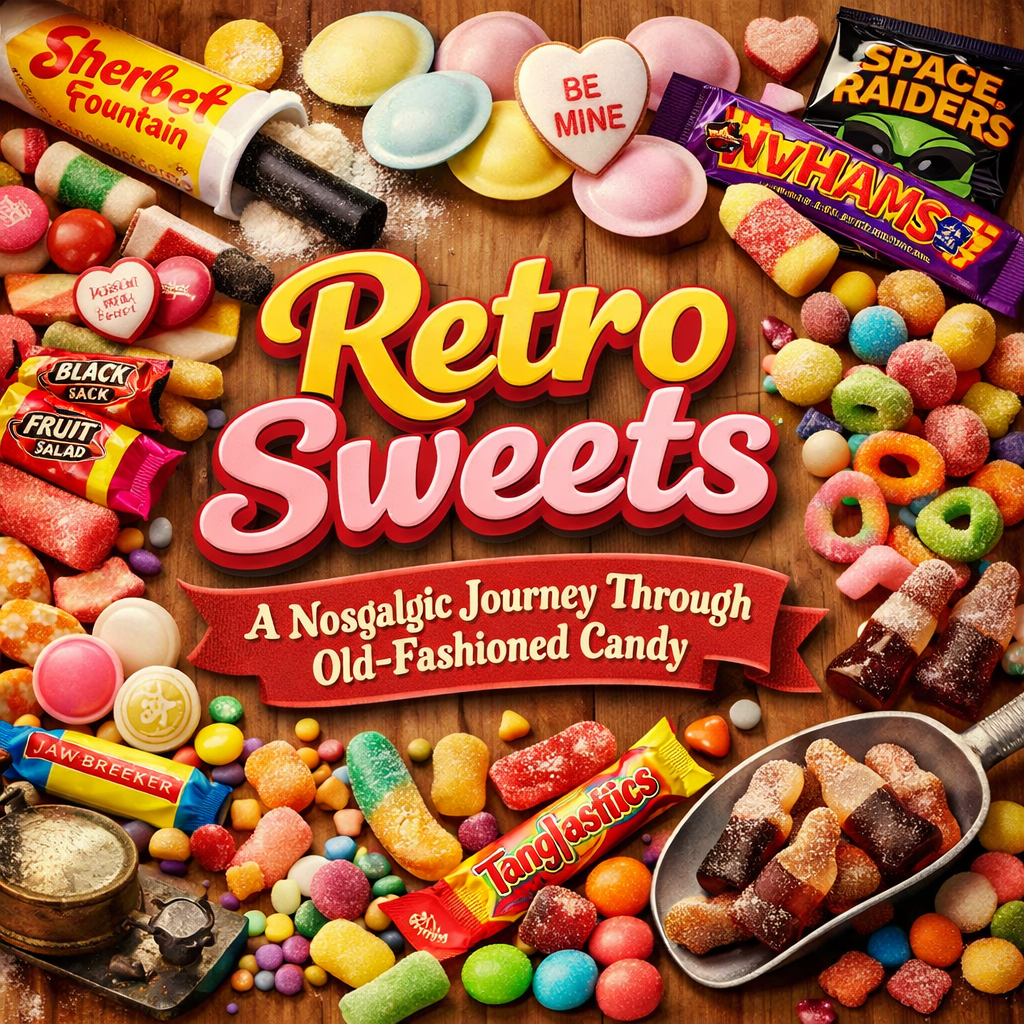
Retro sweets are more than sugar and nostalgia. They’re edible time machines, each wrapper whispering stories of childhood pocket money, corner shops, and sticky fingers. From fizzy sherbet to chewy toffees, old-fashioned confectionery has shaped generations of sweet lovers over the past 60 years and beyond.
In this guide, we’ll explore the history of retro sweets, the most popular classic candies from the last six decades, and some fun facts that prove yesterday’s treats still hold serious flavour power today.
The Sweet History of Old-Fashioned Confectionery
Confectionery has existed for centuries, but the golden age of retro sweets truly bloomed in the mid-20th century. After World War II, sugar rationing ended in the UK in 1953, triggering an explosion of creativity in candy making. Sweet manufacturers experimented boldly with colours, textures, and flavours, giving birth to many of the iconic treats we still love today.
Before mass supermarkets took over, sweets were often sold loose from jars behind the counter. Children would point eagerly while shopkeepers weighed out penny chews on metal scales. This tactile, personal experience is a huge part of why retro sweets still feel magical.
Popular Retro Sweets from the Past 60 Years
Here are some of the most beloved wholesale old-fashioned sweets that have stood the test of time:
1960s–1970s Classics
-
Sherbet Fountain – Liquorice dipped into fizzy sherbet felt like chemistry class you could eat.
-
Flying Saucers – Rice paper discs filled with tangy powder, light as secrets.
-
Black Jacks & Fruit Salads – Chewy, bold, and instantly recognisable by their wrappers.
-
Love Hearts – Romantic advice in sugar form, occasionally confusing, always sweet.
1980s Favourites
-
Drumstick Lollies – Raspberry and milk flavours twisted into chewy perfection.
-
Wham Bars – Neon pink, sour, and unapologetically loud.
-
Refresher Chews – Fizzy, fruity cubes that lived up to their name.
-
Space Raiders – Technically a crisp, but honorary sweet-shop royalty.
1990s Icons
-
Jawbreakers – Multi-layered endurance tests disguised as sweets.
-
Tangfastics – Sour gummies that rewired taste buds everywhere.
-
Rainbow Drops – Corn-based puffs coated in sugary colours, light as air.
-
Millions – Tiny beads of chewiness that poured like treasure.
2000s and Beyond
-
Retro Revival Sweet Boxes – Curated nostalgia delivered by post.
-
Vegan and Sugar-Free Classics – Old favourites reimagined for modern diets.
-
Artisan Boiled Sweets – Traditional recipes making a stylish comeback.
Why Retro Sweets Are Still So Popular
Retro confectionery taps into memory as much as flavour. Studies show taste and smell are strongly linked to emotional recall, which explains why one sherbet dip can summon an entire childhood afternoon.
They also offer contrast to modern candy. Where today’s sweets chase extremes, retro sweets often relied on simple ingredients, bold ideas, and playful design. No algorithms, just imagination and sugar.
Fun Facts About Retro Sweets 🍬
-
Flying Saucers are edible because of Catholic communion wafer technology, originally developed in the 1800s.
-
Love Hearts messages were once hand-stamped, meaning spelling mistakes occasionally slipped through.
-
Sherbet fizzes because of a reaction between citric acid and bicarbonate of soda, the same science behind volcano experiments.
-
Jawbreakers were inspired by 19th-century boiled sugar balls, originally used to test dental strength.
-
Black Jacks nearly disappeared in the 1990s, but demand brought them roaring back.
The Timeless Appeal of Retro Confectionery
Retro sweets remind us that joy doesn’t need updating. A boiled sweet doesn’t care about trends, and a liquorice chew doesn’t chase relevance. They simply exist to be enjoyed, slowly, happily, and often with a smile.
Whether you’re rediscovering childhood favourites or introducing them to a new generation, old-fashioned sweets prove that some flavours never fade, they just get better with time.
So next time you spot a jar of penny sweets or unwrap a classic chew, remember: you’re not just tasting sugar. You’re tasting history.