
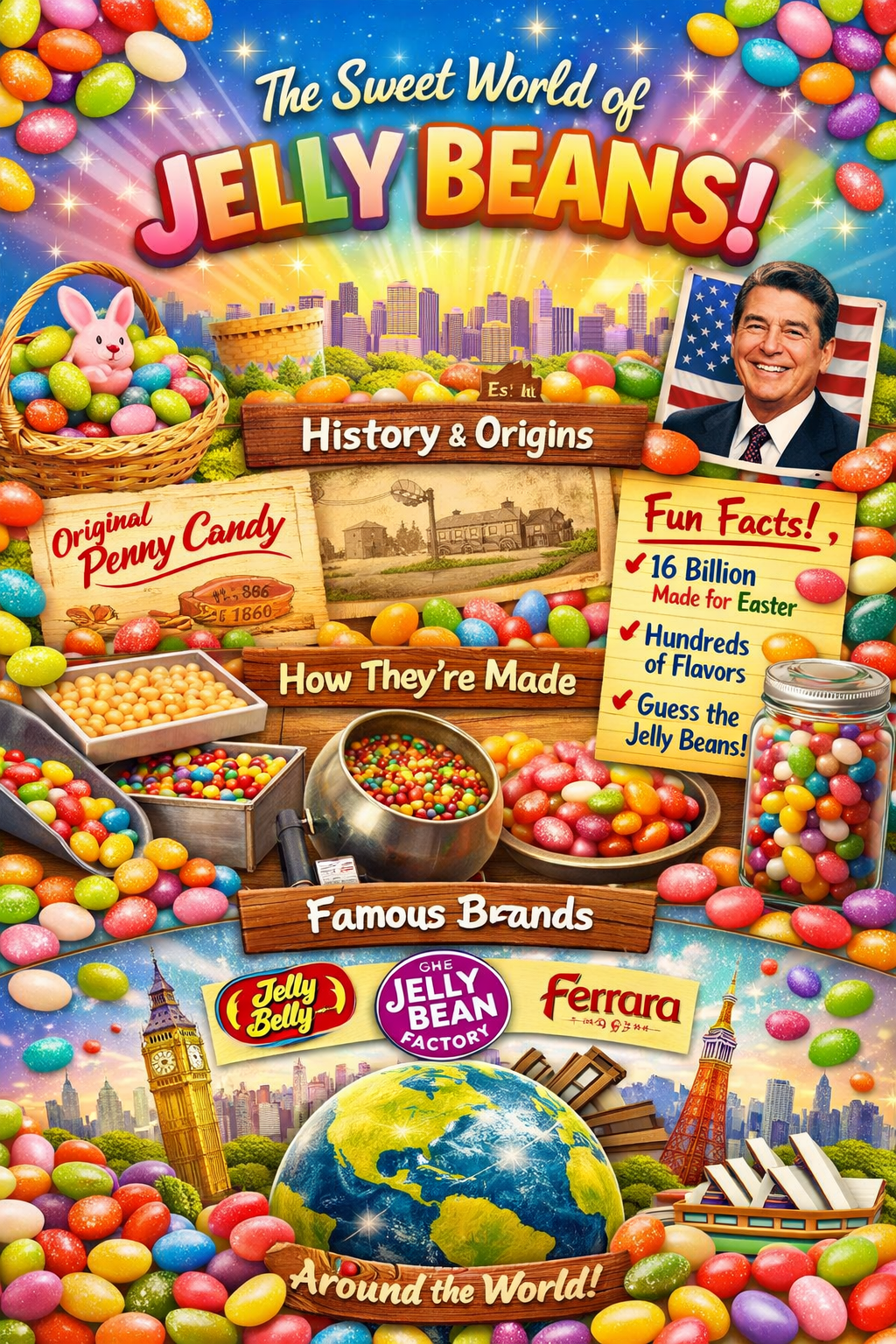
Bright, chewy, and bursting with flavor, jelly beans have become one of the world’s most recognizable candies. These tiny sugar-coated delights appear everywhere from Easter baskets to cinema snack aisles, captivating children and adults alike. Their playful shapes, vibrant colors, and endless flavor combinations have helped jelly beans maintain global popularity for well over a century.
Let’s unwrap the fascinating story behind jelly beans, explore their rise to fame, discover fun facts, and meet some of the manufacturers keeping this beloved treat alive today. 🍬
The Origins of Jelly Beans
The exact origin of jelly beans is somewhat mysterious, but their roots trace back to confectionery traditions from the 19th century. Candy historians believe jelly beans evolved from two earlier sweets:
-
Turkish Delight, a chewy starch-based candy from the Middle East
-
Jordan almonds, almonds coated with a hard sugar shell
Confectioners eventually combined the chewy interior concept with a crunchy sugar coating technique. The result was a small bean-shaped candy with a firm outer shell and soft center.
The earliest known mention of jelly beans appeared in the late 1800s when a Boston candy seller advertised them as penny candy. By the early 20th century, they were widely available in the United States.
Jelly Beans and Their Rise to Popularity
Jelly beans gained massive popularity during the 1930s, especially around Easter. Their egg-like shape made them a perfect fit for Easter baskets, and the tradition continues today.
The candy also gained attention through pop culture. One of the most famous jelly bean enthusiasts was Ronald Reagan, who kept jars of jelly beans in the White House during his presidency. His favorite flavor was licorice, and he credited jelly beans with helping him quit pipe smoking.
Today, jelly beans are sold worldwide in hundreds of flavors ranging from classic fruit varieties to unusual options like buttered popcorn, chili mango, and toasted marshmallow.
How Jelly Beans Are Made
The creation of jelly beans is surprisingly complex and can take one to two weeks to complete. The process combines confectionery science with patience and precision.
1. Creating the Jelly Center
The interior of the bean is made by mixing sugar, corn syrup, starch, and flavorings. This mixture is heated and poured into bean-shaped molds where it begins to set.
2. Starch Molding
The centers are placed into trays filled with cornstarch. This helps maintain the shape while the jelly interior firms up.
3. Panning: Building the Shell
The centers are placed into large rotating drums. Sugar syrup is slowly added layer by layer, creating the crunchy outer shell. This process is called panning and can take several days.
4. Polishing
Finally, the beans are polished with edible wax to give them their signature glossy finish.
The result is a perfectly balanced candy: crunchy outside, chewy inside.
Famous Jelly Bean Manufacturers
Many candy companies across the world produce jelly beans, each adding their own twist in flavors, ingredients, and techniques.
Jelly Belly Candy Company
One of the most famous producers is Jelly Belly Candy Company, known for gourmet jelly beans with highly accurate flavors. Their beans often contain natural flavorings and smaller sizes for a more intense taste.
The Jelly Bean Factory
Based in Ireland, The Jelly Bean Factory produces a wide range of gourmet jelly beans with bold fruit flavors and no artificial colors.
Ferrara Candy Company
Another major producer is Ferrara Candy Company, known for traditional jelly beans often sold during Easter and other holidays.
Together, these companies produce billions of jelly beans each year.
Fun Facts About Jelly Beans
Jelly beans aren’t just delicious. They come with a handful of surprising facts:
🍭 More than 16 billion jelly beans are made each year just for Easter.
🍭 It takes 7–21 days to make a single batch of jelly beans.
🍭 There are hundreds of flavors, including spicy, savory, and dessert-inspired varieties.
🍭 Some jelly bean companies create novelty flavors like grass, pizza, and popcorn. Lots of manufacturers also create wonderful gift items such as jelly beans gift boxes.
🍭 The bean shape likely comes from attempts to resemble small eggs or beans used in earlier sweets.
Another fun tradition is the jelly bean guessing game, where people try to estimate how many beans fit into a jar.
Jelly Beans Around the World
While the United States is one of the largest markets, jelly beans are popular globally. Candy shops in London, Tokyo, and Sydney often stock gourmet versions with regionally inspired flavors.
In recent years, international manufacturers have introduced cultural twists such as matcha, lychee, and tropical fruit blends, expanding the candy’s global appeal.
Why Jelly Beans Remain So Popular
Jelly beans have survived for generations because they combine several irresistible elements:
-
Visual appeal with bright colors
-
Variety with endless flavors
-
Nostalgia tied to childhood memories and holidays
-
Playfulness, thanks to guessing games and mixed flavors
Unlike many candies that stay the same for decades, jelly beans constantly evolve with new flavors and creative marketing ideas.
A Sweet Legacy
From humble penny candy to gourmet confection, jelly beans have built a remarkable legacy in the candy world. Their vibrant colors, inventive flavors, and fascinating history ensure they remain a beloved treat for generations to come.
Whether enjoyed from a jar, shared during Easter, or sampled one daring flavor at a time, jelly beans continue to prove that sometimes the smallest sweets deliver the biggest bursts of joy. 🌈🍬