
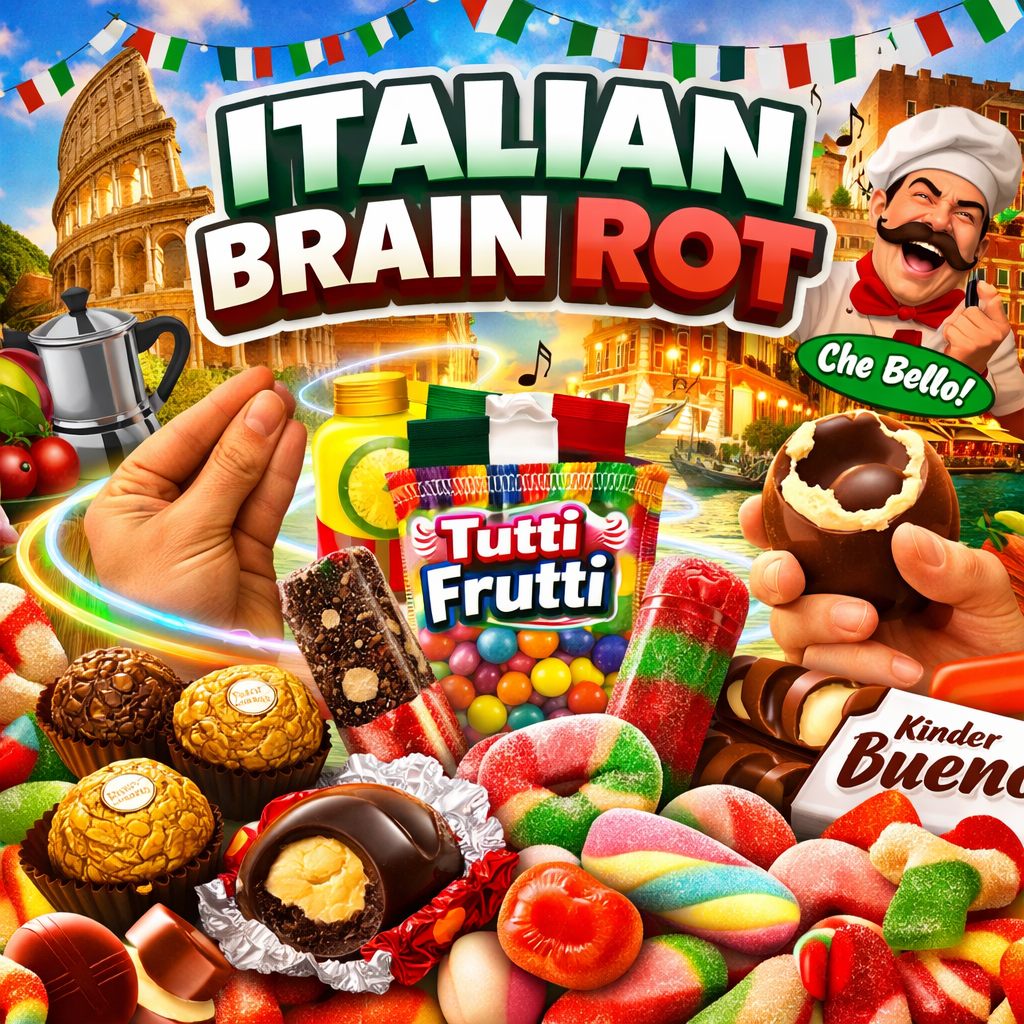
If your feed has recently been hijacked by hypnotic chants, looping nonsense phrases, and brightly coloured sweets doing more acting than eating, congratulations. You’ve encountered Italian Brain Rot. This viral phenomenon has melted timelines across TikTok, Instagram Reels, and YouTube Shorts, blending absurd humour, exaggerated Italian stereotypes, and eye-catching confectionery into a form of internet entertainment that feels chaotic, catchy, and strangely comforting.
But what is Italian Brain Rot, where did it come from, and why are sweets playing such a starring role? Let’s unwrap the story.
What Is Italian Brain Rot?
Italian Brain Rot is a sub-genre of “brain rot” content, a term used online to describe short-form videos so repetitive, surreal, and overstimulating that they lodge themselves in your mind like a stuck melody. The Italian version leans heavily on playful caricatures of Italian culture: dramatic hand gestures, exaggerated accents, operatic background music, and rapid-fire nonsense phrases that sound Italian but often aren’t.
The humour lies in repetition and absurdity. Videos are rarely longer than 30 seconds, yet they loop seamlessly, encouraging viewers to watch again and again without realising they’ve done so.
The Role of Confectionery in the Craze
Sweets are the unsung heroes of Italian Brain Rot. Bright, glossy, and instantly recognisable, confectionery products provide perfect visual anchors in a fast-scrolling feed.
Popular choices include:
-
Italian hard candies with bold wrappers and retro branding
-
Chocolate hazelnut treats, often exaggerated as “nonna-approved” indulgences
-
Gummy sweets and marshmallows, stretched, squashed, or dramatically presented for comedic effect
-
Novelty chocolates, broken open or waved around like theatrical props
These sweets are rarely eaten normally. Instead, they’re pointed at the camera, unwrapped with excessive ceremony, or used as punchlines to nonsensical jokes. The candy becomes part of the performance, not just the snack.
A Brief History of Italian Brain Rot
The roots of Italian Brain Rot can be traced back to early TikTok sound culture around 2022, when users began remixing exaggerated Italian voice clips and pairing them with unrelated visuals. By 2023, creators started leaning into the chaos, deliberately overstimulating viewers with looping audio, zoom effects, and hyper-saturated colours.
Confectionery entered the scene naturally. Sweets are universal, visually appealing, and culturally loaded. Italian brands, or products presented as Italian, added a layer of parody and nostalgia. By 2024, the format had solidified into a recognisable trend, spawning thousands of imitators and spin-offs.
Why Social Media Made It Explode
Italian Brain Rot could only exist in the ecosystem of modern social media. Platforms like TikTok actively reward:
-
Short, looping videos that boost watch time
-
Repetitive audio that becomes recognisable across multiple posts
-
Bold visuals, such as colourful candy wrappers and exaggerated expressions
-
Low-context humour that transcends language barriers
The algorithm doesn’t care if a video makes sense. It cares if you watch it twice. Italian Brain Rot is engineered, knowingly or not, to do exactly that.
Fun Facts About Italian Brain Rot
-
Many of the “Italian” phrases used are completely made up or intentionally incorrect.
-
Some confectionery brands featured in viral videos have reported spikes in search interest without running any ads.
-
The trend has inspired parody versions based on other cultures, though the Italian aesthetic remains the most recognisable.
-
Viewers often describe the content as “annoying but addictive”, a hallmark of successful brain rot media.
-
Food creators and sweet shops now deliberately design products with bold colours and retro packaging to appeal to this style of content.
Why Brands Are Paying Attention
For confectionery brands, Italian Brain Rot is chaotic gold. It thrives on nostalgia, visual excess, and shareability, three things sweets already do well. Even unintentional appearances can drive brand awareness, especially among Gen Z audiences who value irony over polish.
The lesson? In the age of viral trends, you don’t always need a campaign. Sometimes, all it takes is a shiny wrapper, a looping sound, and a little internet madness.
Final Thoughts
Italian Brain Rot is more than just another fleeting trend. It’s a snapshot of how humour, food, and algorithms collide in the modern internet. Confectionery products have become unlikely stars in this digital theatre, proving that even the simplest sweet can take on a second life online.
So next time a brightly wrapped candy starts shouting nonsense at you from your screen, don’t fight it. The brain rot has already won. 🍬🇮🇹