
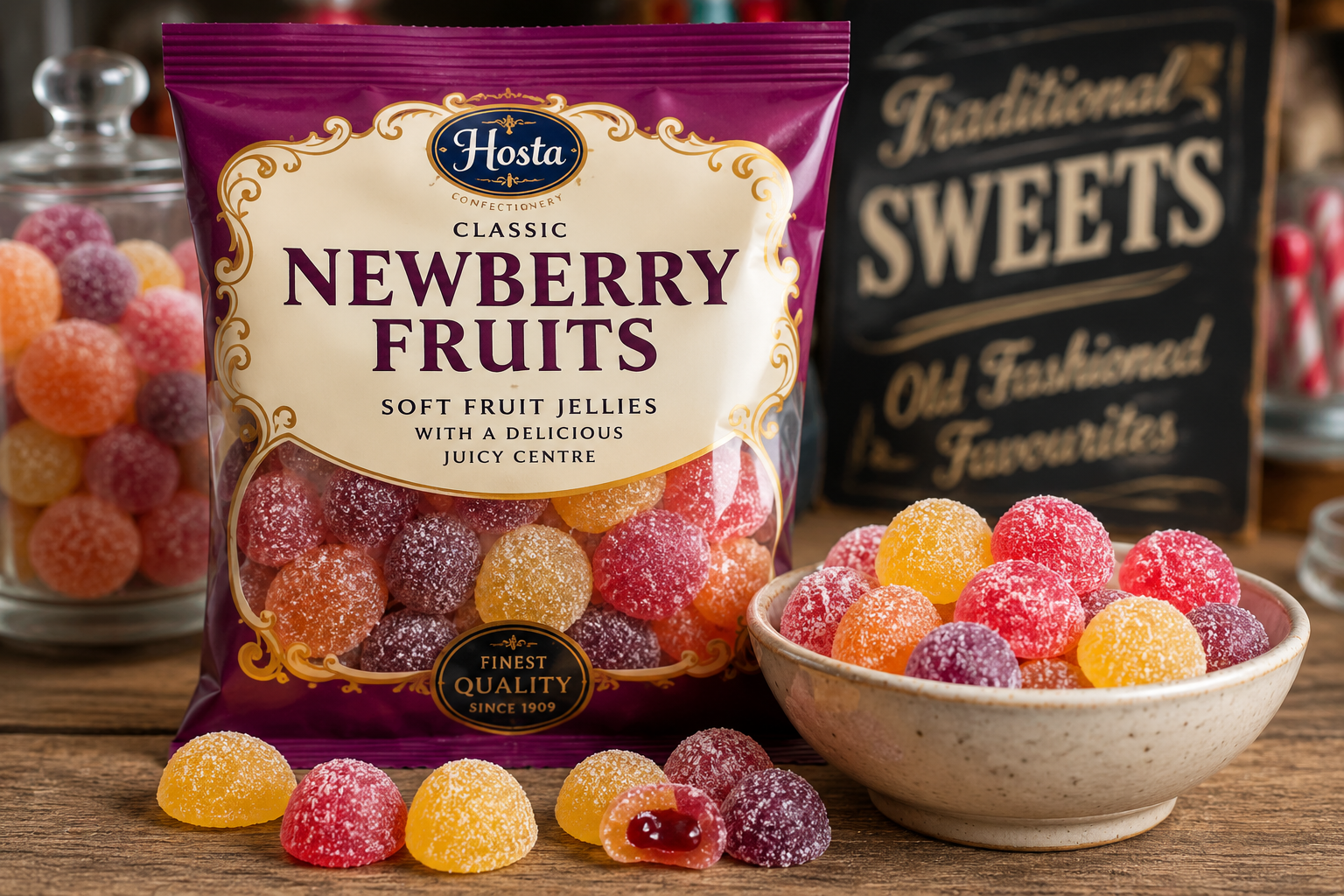
There are some sweets that quietly drift through generations like sugary folklore. They may not shout the loudest on supermarket shelves, but they live permanently in sweet shop jars, tucked beside pear drops, cola cubes and liquorice allsorts. One of those treasured classics is the beloved Hosta Newberry Fruits.
Soft, sugar-dusted and bursting with fruity flavour, Newberry Fruits have been charming sweet lovers for well over a century. Their glossy jewel-like appearance and famously soft liquid centre make them instantly recognisable to anyone who grew up visiting a traditional British sweet shop.
For many confectionery fans, opening a bag of Newberry Fruits feels like unlocking a tiny edible time capsule.
What Are Hosta Newberry Fruits?
Hosta Newberry Fruits are premium fruit jelly sweets coated in a delicate layer of sugar. Unlike many standard jelly sweets, these classic treats are known for their luxurious soft texture and juicy centre, giving them a richer and more indulgent bite.
They are often described as:
- Soft fruit jellies
- Sugar-coated fruit sweets
- Traditional jelly confections
- Retro British sweets
The sweets usually feature a selection of fruity flavours including lemon, raspberry, orange and pineapple style varieties. Their elegant appearance makes them stand out from ordinary gummies, almost like colourful little fruit gems sparkling in a sweet jar.
Even today, they remain hugely popular among lovers of traditional confectionery and retro sweets.
The History of Newberry Fruits 🍓
The story of Newberry Fruits stretches back more than 100 years. According to confectionery retailers and sweet historians, the sweets were originally produced in Bedfordshire and quickly became a favourite throughout Britain.
During the late Victorian and Edwardian eras, fruit jellies became enormously fashionable. Britain had developed a fascination with elegant sugar confectionery, particularly sweets that used fruit flavours and soft textures rather than hard-boiled candy. Newberry Fruits fitted perfectly into this growing market.
Unlike ordinary boiled sweets, these fruit jellies offered something far more luxurious:
- a soft chew,
- a fragrant fruit aroma,
- and their famous juicy middle.
That combination helped them become a staple of old-fashioned sweet shops for generations.
Production later moved to Germany, but manufacturers continued using the traditional recipe that made the sweets famous in the first place.
Why Are They Called “Newberry Fruits”?
The name itself sounds wonderfully vintage. “Newberry” evokes images of orchards, fruit baskets and old confectionery counters lined with glass jars.
Many traditional sweets adopted fruit-inspired names during the late 19th and early 20th centuries because fruit jellies were considered refined treats compared to everyday candy. At the time, fruit sweets were associated with quality ingredients and sophistication.
The word “fruits” in confectionery also became strongly connected with sugar-coated jelly sweets thanks to classics such as fruit pastilles and jelly fruits. Britain’s love affair with fruit confectionery has lasted for generations.
The Secret Behind Their Popularity
So why have Hosta Newberry Fruits survived while countless other sweets vanished into confectionery history?
1. Their Unique Texture
The combination of a soft jelly exterior and juicy centre creates a texture that feels far more indulgent than standard gummy sweets.
2. Traditional Sweet Shop Nostalgia
Retro sweets are booming in popularity across the UK. Many shoppers actively search for childhood favourites that remind them of seaside sweet shops, market stalls and pick ’n’ mix counters.
Newberry Fruits sit proudly in that nostalgic sweet spot.
3. Elegant Appearance
These sweets genuinely look beautiful. Their crystal sugar coating and bright colours make them resemble tiny fruit jewels.
They often appear in:
- traditional sweet jars,
- retro gift hampers,
- wedding sweet tables,
- and vintage confectionery collections.
4. Timeless Fruity Flavours
Fruit flavours never go out of fashion. While trends come and go, classic citrus and berry flavours remain universally loved.
Fun Facts About Newberry Fruits 🍭
They’re Over a Century Old
Some reports suggest Newberry Fruits have been enjoyed for more than 100 years.
They Were Once Considered Luxury Sweets
Soft fruit jellies historically required more specialised confectionery techniques than ordinary boiled sweets, making them premium treats in their early years.
Sugar-Coated Sweets Have Ancient Origins
The tradition of coating sweets in sugar dates back hundreds of years and evolved from early European confectionery techniques.
Retro Sweets Are More Popular Than Ever
Classic British sweets have seen a huge revival thanks to nostalgia culture, retro gifting and online sweet shops.
A Favourite for Traditional Sweet Lovers
Hosta Newberry Fruits appeal to a huge range of sweet fans:
- lovers of retro sweets,
- older generations rediscovering childhood favourites,
- younger shoppers exploring vintage confectionery,
- and anyone who enjoys soft fruity jelly sweets.
They also pair brilliantly with other traditional favourites such as:
- fruit pastilles,
- jelly babies,
- pear drops,
- wine gums,
- and Turkish delight.
For many customers, they are the kind of sweet that disappears from the bag far too quickly.
Why Newberry Fruits Still Belong in Every Sweet Shop
Every great sweet shop needs those heritage classics that spark instant recognition. Hosta Newberry Fruits are exactly that kind of confectionery treasure.
They combine:
- nostalgia,
- fruity flavour,
- elegant presentation,
- and over a century of sweet-making heritage.
In a world filled with ever-changing candy trends and novelty treats, Newberry Fruits remain wonderfully timeless. They are proof that sometimes the old favourites are still the best.
Whether enjoyed as part of a retro pick ’n’ mix selection, gifted in a sweet hamper or simply shared during a cosy evening at home, these classic fruit jellies continue to earn their place among Britain’s most cherished traditional sweets. 🍬