
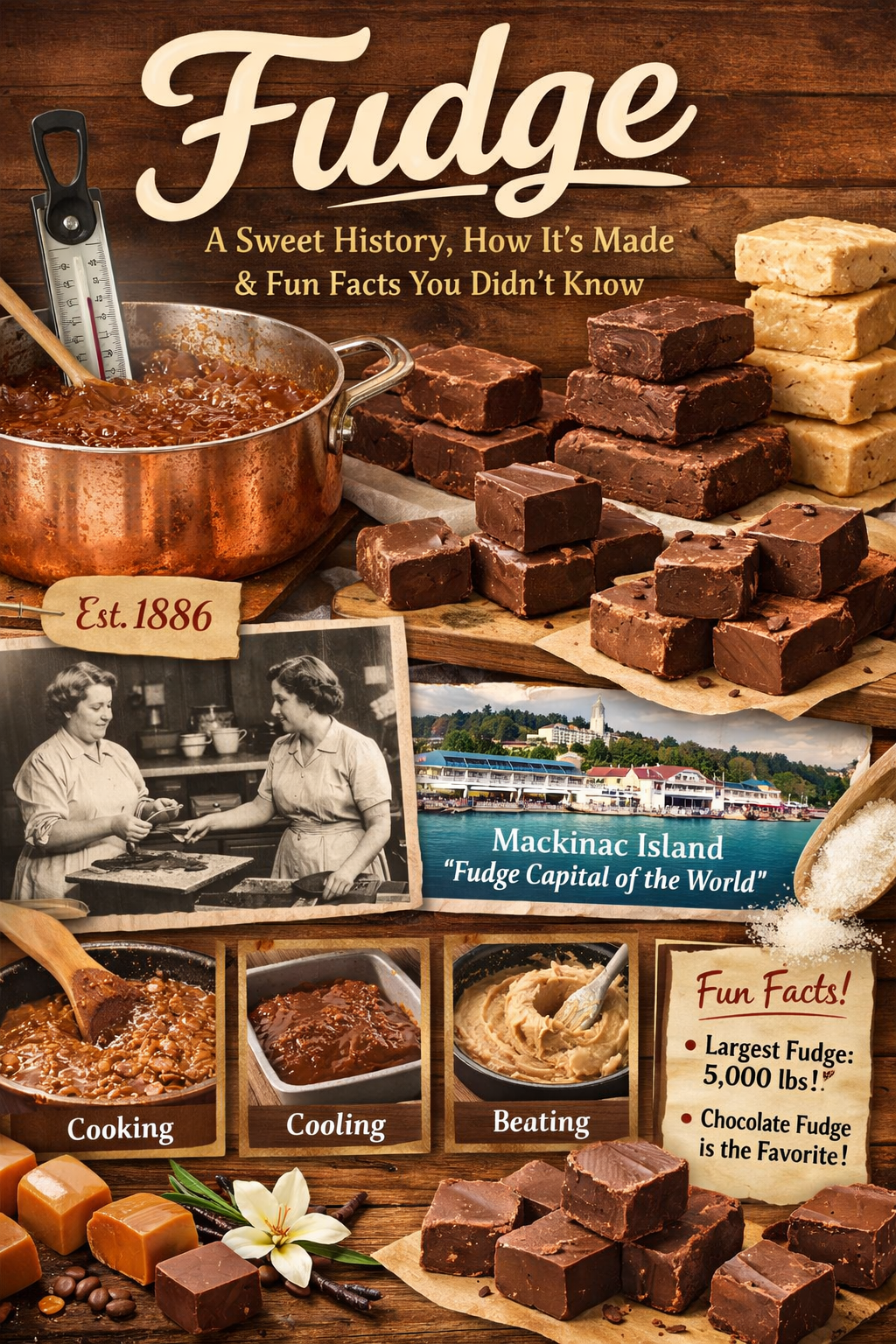
Fudge is one of the world’s most beloved confectioneries. Creamy, rich, and endlessly customizable, this classic sweet treat has delighted candy lovers for generations. From its slightly mysterious origins to the precise science behind its smooth texture, fudge is more than just sugar and butter. It is culinary craftsmanship wrapped in indulgence.
In this guide, we explore the history of fudge, how fudge is made, and some surprising fun facts about fudge that make it even more irresistible.
The History of Fudge Confectionery
The exact origins of fudge are a little… fuzzy. Most food historians agree that fudge was discovered by accident in the late 19th century, likely in the United States. One popular story suggests a batch of caramels “fudged” during preparation, giving rise to a softer, creamier candy. The name stuck.
The first documented mention of fudge dates back to 1886, when a letter written by a student at Vassar College described the making of fudge for 40 cents per pound. Colleges quickly embraced wholesale fudge as a homemade delicacy, especially at women’s institutions, where recipes were shared and perfected.
By the early 20th century, fudge had spread beyond kitchens and campuses into candy shops, seaside towns, and fairs. Places like Mackinac Island in Michigan became famous for fresh, handmade fudge, a tradition that continues today.
How Fudge Is Made
At its core, fudge is a carefully controlled sugar crystal experiment. The ingredients are simple, but the method is precise.
Traditional Fudge Ingredients
-
Sugar
-
Butter
-
Milk or cream
-
Flavorings such as chocolate, vanilla, or peanut butter
The Fudge-Making Process
-
Cooking the mixture
Sugar, butter, and milk or cream are heated together until they reach the soft-ball stage, around 112 to 116°C (234 to 241°F). This temperature is crucial for proper texture. -
Cooling without stirring
Once the mixture reaches the correct temperature, it must cool undisturbed. This step prevents large sugar crystals from forming. -
Beating to perfection
After cooling, the mixture is beaten until it thickens and loses its glossy shine. This creates the small, uniform sugar crystals that give fudge its signature smoothness. -
Setting and slicing
The fudge is poured into a pan, allowed to set, and then sliced into rich, decadent squares.
Modern variations may include condensed milk or marshmallow cream to simplify the process, but traditionalists swear by the classic method.
Fun Facts About Fudge
-
Fudge is technically a crystalline candy, not a caramel, even though they share similar ingredients.
-
Chocolate fudge remains the most popular flavor worldwide, but vanilla, peanut butter, maple, and sea salt caramel are close contenders.
-
The largest slab of fudge ever made weighed over 5,000 pounds.
-
Mackinac Island produces several tons of fudge every year and is often called the “Fudge Capital of the World.”
-
Over-beating fudge can turn it crumbly, while under-beating leaves it too soft. Timing is everything.
Why Fudge Remains So Popular
Fudge endures because it balances simplicity with indulgence. It can be rustic or refined, traditional or wildly inventive. Whether flavored with classic chocolate or infused with modern twists like espresso or chili, fudge continues to evolve while staying comfortingly familiar.
From its accidental beginnings to its place in modern confectionery, fudge proves that sometimes the sweetest successes start with a small mistake.