
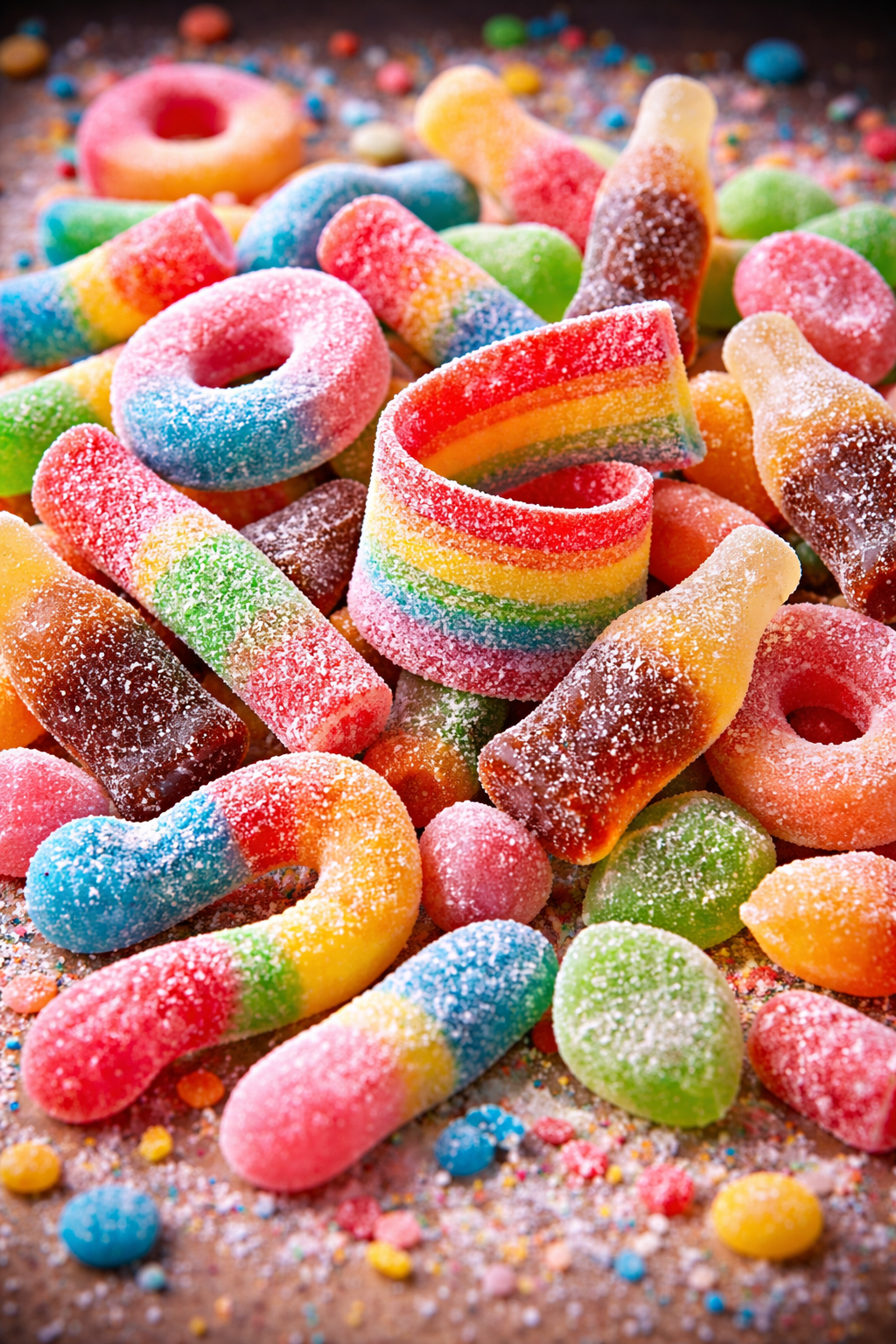
Few confections deliver quite the same playful punch as fizzy sweets. With their crackling tang, tongue-tingling sparkle, and vibrant shapes, these treats feel less like food and more like edible fireworks. From sour belts to popping candies, fizzy sweets have carved out a bold niche in the world of confectionery, standing shoulder to shoulder with their softer, chewier cousins: jelly gummies.
But how did these electrifying sweets come to be? And what gives them that unmistakable fizz?
A Brief History of Fizzy Sweets
The story of fizzy sweets begins in the mid-20th century, when confectioners started experimenting with acids and carbonates to create a sensory experience beyond simple sweetness. One of the earliest breakthroughs came in the 1950s and 60s, when food scientists discovered how to trap carbon dioxide gas within candy.
This innovation led to the creation of popping candy, which quite literally pops in your mouth as the gas is released. By the 1970s and 80s, sour and fizzy coatings became increasingly popular, especially in Europe and North America, where consumers developed a taste for more adventurous flavour profiles.
Over time, fizzy sweets evolved beyond novelty into a staple of sweet shops worldwide, often paired with fruity flavours and eye-catching designs.
The Art of Shape: Moulds and Designs
Just like jelly gummies, fizzy sweets come in an astonishing variety of shapes and sizes. From cola bottles and rainbow belts to rings, worms, and even miniature burgers, the visual appeal is half the fun.
These shapes are made possible through the use of precision moulds, typically crafted from food-grade silicone or starch-based trays. The process mirrors that of gummy production:
-
Liquid candy mixtures are poured into moulds
-
The shapes are set and cooled
-
The sweets are removed and often coated with a fizzy layer
Manufacturers can easily swap moulds to create seasonal designs, themed collections, or entirely new product lines. This flexibility keeps the fizzy sweets market fresh, colourful, and endlessly inventive.
How Fizzy Sweets Are Made
At the heart of every fizzy sweet lies a clever bit of chemistry. The signature “fizz” comes from a combination of acids and carbonates, most commonly:
-
Citric acid or malic acid (for sourness)
-
Sodium bicarbonate (a carbonate that reacts with acid)
When these ingredients come into contact with moisture, such as saliva, they react to release carbon dioxide gas. That’s the fizz you feel dancing across your tongue.
A Simplified Production Process:
-
Base Creation
The sweet base (often similar to gummy or hard candy) is made using sugar, glucose syrup, flavourings, and colourings. -
Shaping
The mixture is poured into moulds or extruded into strips, ropes, or other forms. -
Setting
The sweets are cooled and allowed to firm up. -
Fizzy Coating
A blend of sugar, acids, and carbonates is applied to the surface, often as a dusting or coating. -
Drying and Packaging
The sweets are dried to ensure stability and then packaged for sale.
It’s a delicate balance: too much acid, and the sweet becomes overwhelmingly sour; too little, and the fizz falls flat.
Fizzy vs. Gummy: A Sweet Comparison
While fizzy sweets and jelly gummies often share similar shapes and moulding techniques, their textures and sensory experiences differ dramatically.
-
Jelly gummies are soft, chewy, and smooth
-
Fizzy sweets add a sharp, crackling sensation and often a slightly grainy coating
Some products even combine both worlds, featuring a chewy gummy centre wrapped in a fizzy, sour exterior.
Fun Facts About Fizzy Sweets
-
The fizzing sensation is essentially a miniature acid-base reaction happening on your tongue.
-
Popping candy can reach tiny pressure levels before releasing gas, creating its signature crackle.
-
Sourness in fizzy sweets can actually stimulate saliva production, intensifying flavour perception.
-
Some of the most extreme sour sweets are designed as novelty challenges due to their intense acidity.
-
Fizzy coatings are carefully engineered to remain stable on the shelf but react instantly when eaten.
Why We Love the Fizz
Fizzy sweets are more than just candy, they are an experience. They engage multiple senses at once: taste, touch, and even sound. That crackle and sparkle create a moment of surprise with every bite, turning something simple into something memorable.
In a world full of ordinary sweetness, fizzy sweets dare to be loud, sharp, and delightfully unpredictable. Like a tiny carnival on your tongue, they remind us that sometimes, the best treats are the ones that don’t sit still.
Whether shaped like a classic cola bottle or a neon-coloured worm, fizzy sweets continue to evolve, blending creativity, chemistry, and craftsmanship into every tangy bite.