
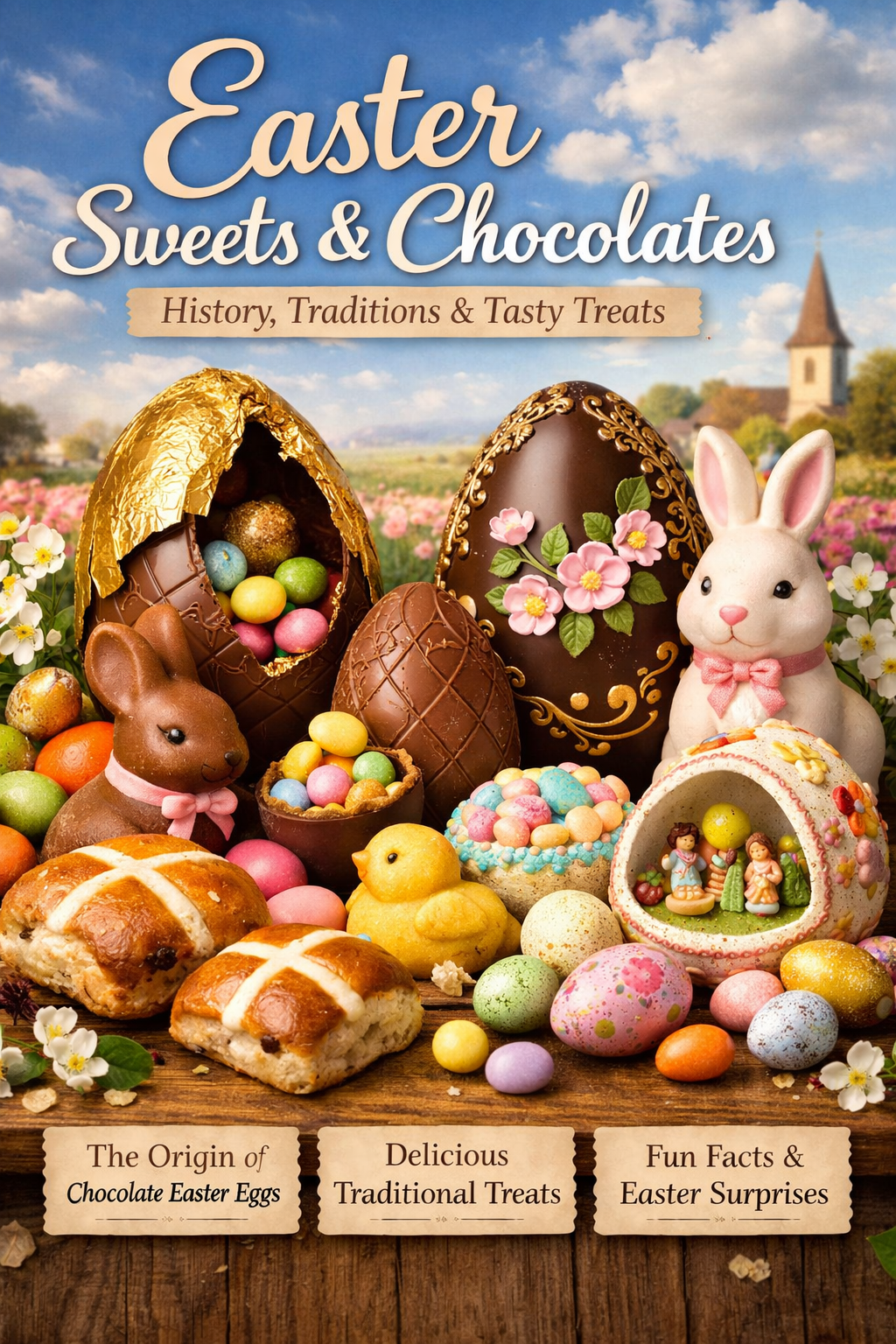
Easter arrives each spring like a sugar-dusted celebration of renewal. Flowers bloom, days lengthen, and shop windows glow with foil-wrapped eggs, chocolate bunnies, and pastel confections. Easter sweets and chocolates are more than seasonal indulgences. They are edible storytellers, carrying centuries of history, symbolism, and playful fun.
In this guide, we explore the history of Easter celebrations, the rise of chocolate Easter eggs, and the traditional sweets that make this holiday so irresistibly sweet.
A Brief History of Easter Celebrations
Easter is one of the most significant festivals in Christianity, commemorating the resurrection of Jesus Christ. Its timing is linked to the lunar calendar and the spring equinox, which is why Easter falls between late March and late April each year.
Long before chocolate entered the scene, Easter overlapped with ancient spring festivals celebrating rebirth, fertility, and new life. Eggs became powerful symbols during these early celebrations, representing fertility and renewal. In medieval Europe, eggs were forbidden during Lent, the 40 days of fasting before Easter. When Easter Sunday arrived, eggs returned triumphantly, boiled, decorated, gifted, and eventually eaten in abundance.
This egg-centric tradition laid the foundation for everything that followed, including the chocolate creations we treasure today.
The Sweet Rise of Chocolate at Easter
Chocolate’s relationship with Easter began in the 19th century, once advances in cocoa processing made molded chocolate possible. Early chocolate eggs were solid and bitter, a far cry from today’s silky creations, but they sparked a tradition that quickly captured hearts.
As chocolate-making techniques improved, hollow eggs emerged, allowing chocolatiers to create larger, more decorative designs while using less chocolate. The practice of hiding small surprises inside eggs followed soon after, adding an element of discovery to every bite.
Today, Easter chocolates range from luxury artisan eggs to playful novelty treats, making chocolate the undisputed star of Easter sweets.
Fun Facts About Chocolate Easter Eggs
-
The first chocolate Easter eggs appeared in France and Germany in the early 1800s.
-
Hollow Easter eggs were a game-changer, making elaborate designs affordable and gift-friendly.
-
The UK is one of the world’s biggest consumers of chocolate Easter eggs each year.
-
Foil wrapping is not just decorative; it helps protect chocolate from light and heat while adding festive flair.
-
Some Easter eggs are handcrafted works of art, decorated with edible gold, hand-painted cocoa butter, or sculpted chocolate flowers.
Each egg carries a blend of tradition, craftsmanship, and pure joy.
Traditional Easter Sweets Around the World
Easter confectionery is wonderfully diverse, reflecting local cultures and flavors.
Hot Cross Buns
Spiced, fruity, and marked with a cross, these buns are traditionally eaten on Good Friday in the UK and beyond. While not chocolate-based, they are an essential part of Easter’s sweet heritage.
Chocolate Bunnies
The Easter Bunny, a symbol of fertility and spring, hopped into popular culture in the 1700s. Chocolate bunnies followed soon after and now come in every size imaginable, from pocket-sized treats to towering centerpieces.
Marzipan Fruits and Animals
In parts of Europe, especially Germany and Italy, marzipan shaped like fruits, eggs, or lambs is a classic Easter sweet, blending almond richness with artistic flair.
Sugar Eggs and Fondant Creams
Before chocolate dominated, sugar eggs filled with scenes or soft fondant centers were popular Easter gifts. Some of these nostalgic treats still appear today, especially in artisan candy shops.
Why Easter Sweets Remain So Popular
Easter sweets and chocolates combine symbolism with celebration. Eggs represent new beginnings, chocolate signals indulgence, and sharing sweets brings people together. Easter egg hunts turn chocolate into an adventure, while gifting beautifully wrapped treats feels like offering springtime itself.
From childhood excitement to grown-up nostalgia, Easter chocolates bridge generations with every unwrap and snap.
A Sweet Ending
Easter sweets and chocolates are far more than seasonal treats. They are rooted in ancient traditions, shaped by centuries of celebration, and continually reinvented by modern confectioners. Whether you prefer a classic milk chocolate egg, a luxurious dark chocolate creation, or traditional Easter sweets from around the world, each bite carries a story of renewal, joy, and a little springtime magic.
As Easter approaches, one thing is certain: history has never tasted so sweet. 🍫🥚